Booking a Flight You Don't Plan to Finish: The Hidden City Trick Explained

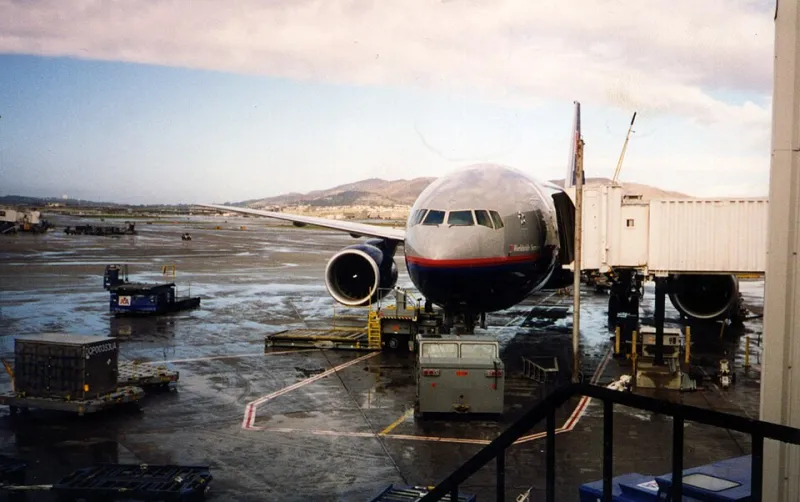
Photo: Photograph by Mike Peel (www.mikepeel.net)., CC BY-SA 4.0, via Wikimedia Commons
Imagine you want to fly from New York to Denver. A nonstop ticket runs $380. But a flight from New York to Las Vegas — with a layover in Denver — is only $210. So you book the Vegas itinerary, get off in Denver, and pocket the difference. Your checked bag ends up in Nevada, but hey, you saved $170.
Welcome to hidden city ticketing: one of the most debated money-saving strategies in the budget travel world. It's clever, it's real, and it works — until it doesn't. This isn't a simple hack you can apply on autopilot. It's a calculated gamble with some genuinely serious downsides, and anyone considering it deserves the full, unfiltered story.
Why This Pricing Quirk Even Exists
Airline pricing is not intuitive. It's driven by algorithms, route competition, hub economics, and demand modeling — not by logic that makes sense to the average traveler. The reason a connecting flight sometimes costs less than a nonstop comes down to competitive pressure on specific city pairs.
Airlines compete aggressively on popular point-to-point routes like New York to Denver. But the New York to Las Vegas route might see less direct competition, and the airline prices it differently based on its own revenue calculations. The Denver layover is essentially incidental to their pricing model. The result is a structural quirk that savvy travelers have exploited for decades.
Sites like Skiplagged built entire businesses around surfacing these discrepancies — and promptly got sued by United Airlines and Orbitz for doing so. (Skiplagged survived, for the record, but the legal battle highlighted just how seriously airlines take this.)
Is It Actually Illegal?
Short answer: no, not in a criminal sense. You won't be arrested at the gate for not boarding your connecting flight. Hidden city ticketing is not a crime under US law.
Longer answer: it absolutely violates the terms of service of virtually every major airline. When you accept the ticket purchase agreement, you're agreeing to fly the full itinerary as booked. Intentionally skipping a segment puts you in breach of that contract.
The practical consequences exist in a gray zone. Airlines can — and occasionally do — void your frequent flyer miles, close your loyalty account, or flag your profile. In rare but documented cases, airlines have sent demand letters to travelers for the fare difference. These are edge cases, but they're not urban legends.
For most occasional travelers doing this once or twice on low-profile routes, the risk of enforcement is low. For frequent flyers who rely on loyalty programs? The calculus changes significantly.
The Luggage Problem Nobody Talks About Enough
If there's one thing that kills hidden city ticketing as a practical strategy for most people, it's checked bags. Your luggage is tagged to your final destination — Las Vegas in our earlier example — not your intended stop. There is no mechanism to retrieve it mid-journey. If you check a bag, it's going to Vegas without you.
This means hidden city ticketing is exclusively a carry-on strategy. If you can pack light and travel with only a personal item or small carry-on, the logistics become manageable. If you're a checked-bag traveler, this trick simply isn't compatible with how you fly.
Also worth noting: if your first leg is delayed and you miss the connection, the airline will rebook you on the next available flight to your ticketed destination — Las Vegas — not Denver. You have no standing to demand alternative routing to your actual intended city. The airline booked you to Vegas; as far as they're concerned, that's where you're going.
When the Math Actually Makes Sense
Despite the risks, there are scenarios where hidden city ticketing is a rational choice for a budget traveler who goes in with eyes open.
It works best when:
- You're flying carry-on only, full stop.
- The savings are substantial — we're talking $100 or more, not $30.
- You're not a frequent flyer on that airline, or you're willing to forgo miles on that trip.
- The route is a one-way trip, since booking a return from your hidden city destination will break the itinerary entirely.
- The layover city is your actual destination, obviously — but also one where the airline isn't likely to notice a pattern across multiple bookings.
It works poorly — or not at all — when you're a loyalty program member with anything to lose, when you're checking bags, or when your schedule is tight and a rebooking to the wrong city would be catastrophic.
Safer Alternatives That Deliver Real Savings
If hidden city ticketing feels like too much exposure for your travel style, there are lower-risk paths to meaningful savings that don't put your loyalty accounts or travel plans at risk.
Positioning flights accomplish something similar without the deception. If flying out of a nearby hub is significantly cheaper than your home airport, just drive or take a cheap regional connection to that hub. You're not violating any terms — you're just being strategic about your departure point.
Budget carrier comparisons are still underused. Southwest, Frontier, and Spirit often price routes aggressively on corridors where legacy carriers are expensive. Running a parallel search on those carriers before committing to a major airline ticket takes five minutes and can yield the same savings without any of the risk.
Flexible date searches remain one of the most powerful and completely legitimate tools available. Shifting a departure by one or two days — particularly from Friday to Thursday, or Sunday to Tuesday — routinely surfaces fares that are 20 to 40 percent lower than peak-day pricing. SkyDeal Fares is built around exactly this kind of smart fare comparison, and it costs you nothing but a little flexibility.
Mistake fares and flash sales are another avenue worth monitoring. Airlines periodically publish fares that are genuinely mispriced due to technical errors or aggressive promotional pushes. These are fully legitimate tickets — no contract violations, no risk to your account — and they occasionally represent savings that dwarf what hidden city ticketing might offer.
Our Take
Hidden city ticketing sits in an uncomfortable middle ground: legally murky, ethically questionable, practically risky, but not entirely without logic for a very specific type of traveler in a very specific situation. If you're a carry-on-only, non-loyalty-dependent, occasional flyer staring at a $150+ price gap, it's a choice some people make — and usually get away with.
But for most travelers, the combination of luggage constraints, loyalty account exposure, and rebooking vulnerability makes it a harder sell than it initially appears. The savings are real. So are the risks.
At SkyDeal Fares, we'd rather help you find deals that don't come with an asterisk. There are enough legitimate ways to fly cheaper that you rarely need to venture into gray-area territory — and we're here to help you find every single one of them.